Shade-Loving Perennials: A Beginner's Guide to Planting a North-Facing Border
A north-facing border is usually the last piece of a garden anyone plants, and the first one anyone apologises for. Too dark, too damp, nothing will grow — that is the assumption. The reality is more interesting. Shade holds moisture, keeps roots cool through a hot Italian July, and shelters the soft foliage that scorches in full sun. Hellebores, ferns and hostas do not merely tolerate these conditions; they look better in them than they ever will on a sunny patio.
What follows is a practical route into planting that border for the first time: how to read the shade you actually have, which perennials are worth the money, how far apart to set them, and what the first season will ask of you.
Read the shade before you buy a single plant
Shade is not one condition. A north wall that never sees direct sun, a border beneath a deciduous cherry, and the strip along a hedge are three different gardens with three different plant lists. Spend a week watching before you spend anything.
In mid-June, note how many hours of direct sun the border receives and at what time of day. Morning sun is gentler than the low western light that arrives at six in the evening. Then push a trowel into the soil. If it crumbles easily, you have workable shade. If it is gritty and dusty in August, you have dry shade, which is the hardest kind. If water sits in the hole, you have a drainage problem, and no amount of plant choice will fix it — raise the bed or plant in mounds.
One thing surprises new gardeners: a north border is rarely dark. The summer sun swings high, and pale walls, paving or gravel reflect a surprising amount of light back into it. Alchemilla, hardy geraniums and Japanese forest grass grow perfectly well in that half-light. What suffers are the sun-worshippers — lavender, rosemary, most Mediterranean herbs — so leave them where they belong.
Ten perennials that earn their place
Start with plants that are genuinely tough rather than merely tolerant. These are reliable in temperate gardens and forgiving of a beginner's mistakes:
- Helleborus × hybridus (Lenten rose): evergreen, flowers from late winter into spring, and copes with dry shade once established.
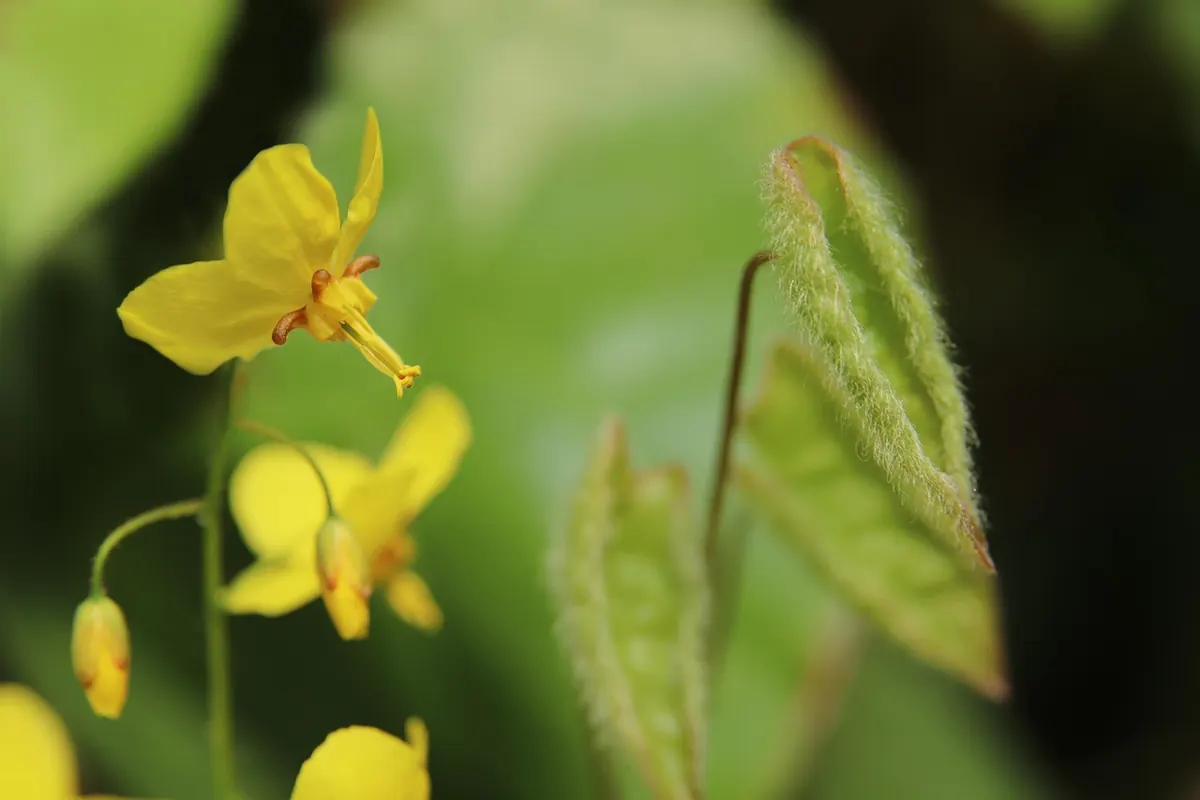
- Epimedium: the best plant for the dry ground under trees. Heart-shaped leaves, delicate spring flowers, no fuss.
- Ferns: Dryopteris filix-mas and Polystichum setiferum give structure and texture and ask for almost nothing.
- Hosta: unbeatable foliage in blue, gold and cream. Slugs love it, so plant it where you will actually see the damage early.
- Brunnera macrophylla: forget-me-not flowers in spring and, in the silver-leaved forms, foliage that lights up a dark corner.
- Pulmonaria: spotted leaves and some of the earliest flowers for bees. It dislikes drying out, so keep it out of the driest spots.
- Heuchera: grown for colour rather than flowers. Wants decent drainage and resents sitting wet in winter.
- Geranium macrorrhizum: the answer to dry shade at the foot of a hedge. Aromatic, weed-suppressing, almost indestructible.
- Tiarella: a froth of white flowers over foliage that colours in autumn. Happiest in the cooler, damper end of the border.
- Anemone hupehensis: late summer and autumn colour when the border needs it most. Give it room, because it spreads.
If your soil stays damp, add astilbe and ligularia, which will sulk in dry ground but thrive where the hose never quite reaches.
Fix the soil first, then plant
Perennials in shade grow slowly, and slow growth is unforgiving of competition. Clear the ground properly before anything goes in: bindweed and ground elder regrow from fragments of root, so dig them out, sift the soil, and expect to repeat the exercise.
Fork the top 20cm, then spread 5–8cm of garden compost or well-rotted manure and work it in. Under trees, keep cultivation shallow — you will damage surface roots — and do not pile soil against the trunk. If drainage is poor, a raised bed built 15cm above the surrounding ground solves more problems than any plant choice.
Spacing: closer than the label suggests
Plant labels give the mature spread of a plant after several years. A perennial bought in a small pot may take three seasons to reach it, and a border planted at full spacing looks like bare soil with dots in it for far too long. Set most perennials at roughly two-thirds of their stated spread, then allow extra room for the spreaders.
- Stand the pots out on the soil in their final positions and step back. Move them around before you dig anything.
- Soak each pot in a bucket until the bubbles stop — dry rootballs are the commonest reason new plants fail.
- Dig a hole twice the width of the pot and the same depth.
- Loosen any circling roots with your fingers. Do not tease the rootball apart aggressively; just open it up.
- Backfill, firm with your heel, and water in thoroughly even if rain is forecast.
- Mulch 5cm deep around the plant, keeping it clear of stems and crowns.
Plan for three seasons, not one
A shade border that flowers in May and then does nothing is easy to create by accident. Build it in layers instead.
Spring
Hellebores, pulmonaria, epimedium and brunnera carry the border from February to May, before the trees above it have leafed out.
Summer
Hostas, ferns, astilbe and hardy geraniums take over, with foliage doing most of the work. This is where a repeated plant — the same fern in three places, the same heuchera along an edge — pulls a scattered collection into something that looks designed.
Autumn and winter
Japanese anemones and actaea extend the season, fern fronds hold their shape well into winter, and hellebore foliage stays green through the worst of it. Cut back only what has collapsed.
The first year is mostly watering
Newly planted perennials need help until their roots reach beyond the original rootball. Water deeply once a week rather than sprinkling daily; a long soak encourages roots downward. In a hot, dry August, twice a week is sensible for anything newly planted.
Keep the mulch topped up, because bare soil in shade dries faster and weeds faster than you expect. Watch for slugs in damp spring weather — evening patrols with a torch are effective, and biological controls are sold by most garden centres. Cut back old hellebore leaves in late winter to reduce leaf spotting. Lift and divide overcrowded clumps of geranium and epimedium every few years; the middle dies out first, which is your signal.
Start with a small, generous planting
Choose two or three square metres and plant them well, rather than spreading a thin selection across the whole border. Group three of the same plant together, water through the first summer, and let the foliage knit. You will learn more from that patch in one season than from a catalogue in ten. The rest of the border can wait until you know what the light and the soil are actually doing.
Photo: Nennieinszweidrei / Pixabay
You Might Also Like
Pot size, uneven watering, late staking and careless feeding account for most disappointing container tomato crops. A practical guide to spotting each mistake early, plus a five-minute weekly routine.
A practical, beginner-friendly guide to choosing a small rain barrel, siting it safely, connecting it to a downpipe and putting harvested rain to work in pots and borders.