Native Pollinators vs. Honeybees: What Your Garden Really Needs
Walk into almost any garden centre in spring and you will see a shelf of bee hotels, pollinator seed mixes and honeybee-themed gifts. The message is simple: save the bees. But which bees? A garden that hums with life is not built by adding a single hive at the end of the lawn. It comes from flowers, nesting places and a little deliberate untidiness, arranged with wild pollinators in mind.
Honeybees matter. They are remarkable, manageable and useful for many crops. Yet they are only one part of a much larger story. The insects that pollinate a garden most thoroughly are often the ones nobody ordered, bought or installed: solitary bees emerging from bare soil, bumblebees working a rosemary hedge in February, hoverflies hovering over fennel in August.
The honeybee is a managed generalist
The western honeybee is native to Europe, Africa and parts of Asia, but it has been moved widely around the world. Even within its native range, a managed hive is a different presence from the wild bee communities that evolved with local plants. A colony is large, social and highly organised. It can be moved into an orchard when trees bloom and moved out again when the job is done. That reliability is why growers value honeybees for crop pollination.
But a hive is livestock, not a biodiversity strategy. Keeping honeybees does not compensate for lost wild habitat, and in places where floral resources are thin, added hives can increase competition for pollen and nectar. A honeybee colony can also dominate a small garden’s flowers simply because it sends so many foragers at once. Honeybees are generalists; they will visit many plants, but they do not replace the specialised wild insects that pollinate particular native plants or nest in particular soils.
Native pollinators do the work no hive can copy
“Native pollinator” is an umbrella term. It includes wild bees such as bumblebees, mining bees, mason bees and leafcutter bees; it also includes hoverflies, butterflies, moths, beetles and some wasps. Many have close relationships with native plants, and many have life cycles that a honeybee colony cannot imitate.
Some solitary bees emerge for just a few weeks each year, timed to a particular flower or tree. Bumblebees can fly in cooler, duller weather than honeybees and are important early in the season. They also perform buzz pollination, shaking pollen loose from flowers such as tomatoes, aubergines and blueberries. Hoverflies are pollinators as adults, while many of their larvae eat aphids. Moths take over the night shift, visiting pale or night-scented flowers. Beetles and small wasps add another layer of visits that often goes unnoticed.
Diversity is the point. A garden with one reliable pollinator is a garden with a single thread; a garden with many is a net.
Plant for a long season, not a single display
Many pollinator gardens fail in the gaps. There is plenty of colour in June, then very little in late summer, or a burst of spring bulbs followed by a quiet lawn. Aim for something in flower from early spring to the first frost. Use regionally native plants where you can, and check local invasive-species lists before adding anything vigorous.
- Early spring: willow, hawthorn, fruit trees, rosemary, crocus, lungwort and dead-nettle.
- Late spring to early summer: lavender, sage, catmint, borage, oregano, clover and alliums.
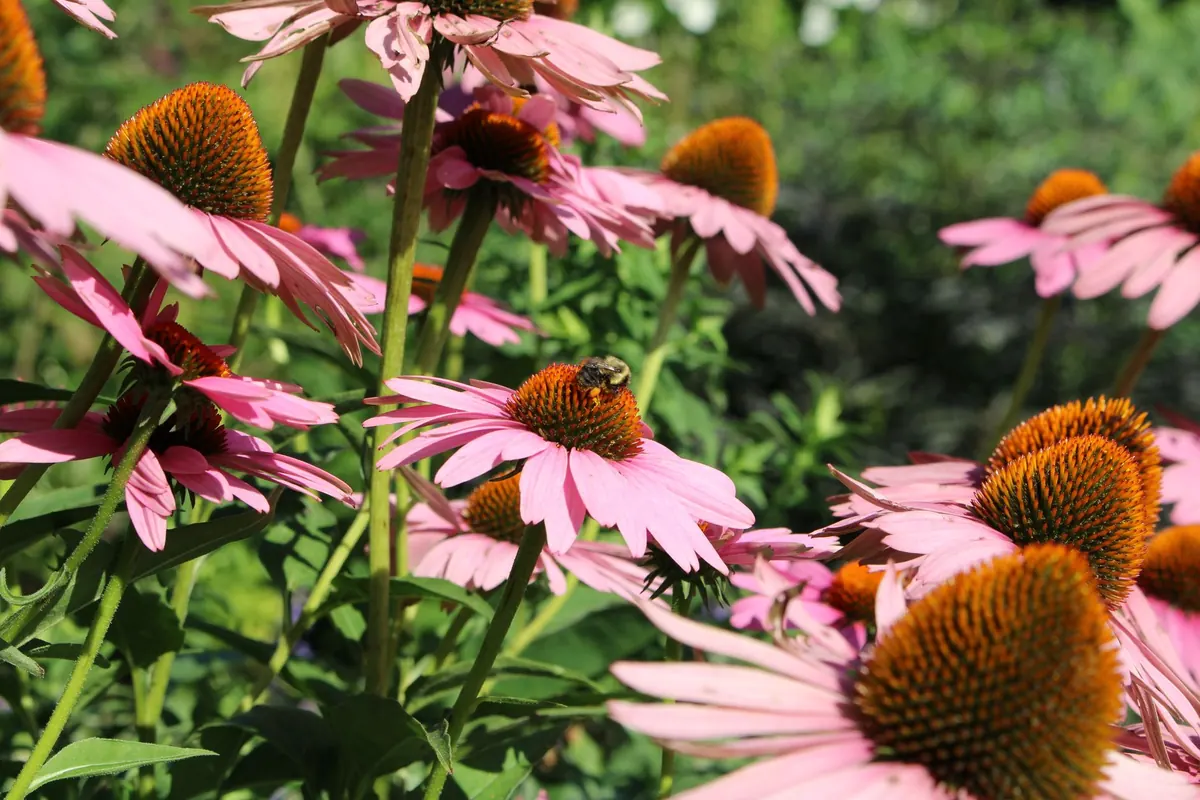
- High summer: sunflower, calendula, echinacea, fennel, dill, marsh mallow and thyme.
- Autumn: asters, sedum, ivy, autumn sage and goldenrod, but only where local guidance says it is not invasive.
Plant in generous clumps rather than single specimens. A lone lavender bush is a snack; a metre of lavender is a destination. Let herbs flower before you cut them back, and allow a few vegetables such as leeks, onions and carrots to go to seed. Their flowers are often excellent for small flies and wasps.
Think in flower shapes, not just colours
Flower shape decides who can reach the nectar. Tubular flowers such as sage, lavender and foxglove suit long-tongued bumblebees. Open daisies and single roses give hoverflies and beetles a place to land. Flat umbels such as fennel, dill and yarrow attract tiny wasps and flies. Night-scented flowers and pale blooms help moths. Double flowers may look rich, but many have little or no accessible nectar and pollen. Choose single varieties when you can.
Habitat beats a bee hotel
Most wild bees do not live in a hanging wooden box. Many nest in the ground, in sunny patches of bare or sparsely vegetated soil. Others use dead wood, pithy stems or old beetle tunnels. Before you buy another bee hotel, look at the ground and the edges of your garden. That is where much of the action happens.
- Leave a sunny patch of bare, undisturbed soil, especially on a slope or in a raised bed.
- Keep a pile of dead wood or prunings in a quiet corner.
- Cut hollow or pithy stems and bundle them horizontally in a sheltered, south-facing spot.
- Let leaf litter and seed heads stand through winter; they shelter insects and provide food.
- Set out shallow water with pebbles or stones so insects can drink without drowning.
Bee hotels can help, but only if they are maintained. Tubes should be removable, clean and replaceable, and the box should be placed where it stays dry. A damp, uncleaned hotel can become a nursery for parasites and disease. If you are not ready to manage one, a loose pile of stems and dead wood is often more useful.
Pesticides are the other obvious pressure. Avoid spraying flowering plants, and be cautious even with products labelled organic; many kill more than the target pest. Ask before buying plants that may have been treated with systemic insecticides, and keep weedkillers away from verges and hedges.
Where honeybees fit, without crowding out the rest
If you want to keep honeybees, do it with eyes open. Talk to a local beekeeping association, learn what forage is available in your area and consider whether the garden can support a colony without reducing resources for wild insects. Provide a reliable water source nearby, and place hives thoughtfully rather than treating them as a garden ornament.
For orchards and berry crops, managed hives can be useful. But they work best alongside wild pollinators, not instead of them. A garden with diverse habitat often gets good pollination without a hive at all. If you already keep bees, the most helpful thing you can do is plant more flowers and preserve nesting ground. More forage benefits everyone.
A simple plan for a pollinator-friendly garden
Start with observation rather than shopping. Walk the garden in the morning and again in late afternoon, and note where insects are already visiting. Then work through this sequence.
- Find the bloom gaps. Add three regionally appropriate plants that flower at different times, not three that all peak in June.
- Choose one sunny, undisturbed corner for bare soil, dead stems and a small woodpile. Leave it alone.
- Let herbs and a few vegetables flower. Reduce mowing along one edge or under a tree.
- Set out shallow water with stones, and refresh it through dry spells.
- Remove pesticide use from flowering areas, and ask about treatments before buying new plants.
- Watch for ten minutes a week. Note who visits, then add or move plants to fill the quiet periods.
You do not need a hive to have a pollinator garden. You need flowers through the season, nesting places, water and patience. The reward is not a neat label on a seed packet, but a garden that supports the insects that belong there, including the honeybees when they fit.
Photo: Alex Ohan / Pexels
You Might Also Like
Pot size, uneven watering, late staking and careless feeding account for most disappointing container tomato crops. A practical guide to spotting each mistake early, plus a five-minute weekly routine.
A practical, beginner-friendly guide to choosing a small rain barrel, siting it safely, connecting it to a downpipe and putting harvested rain to work in pots and borders.